Is Skin Cancer Genetic? Understanding Your Family Risk
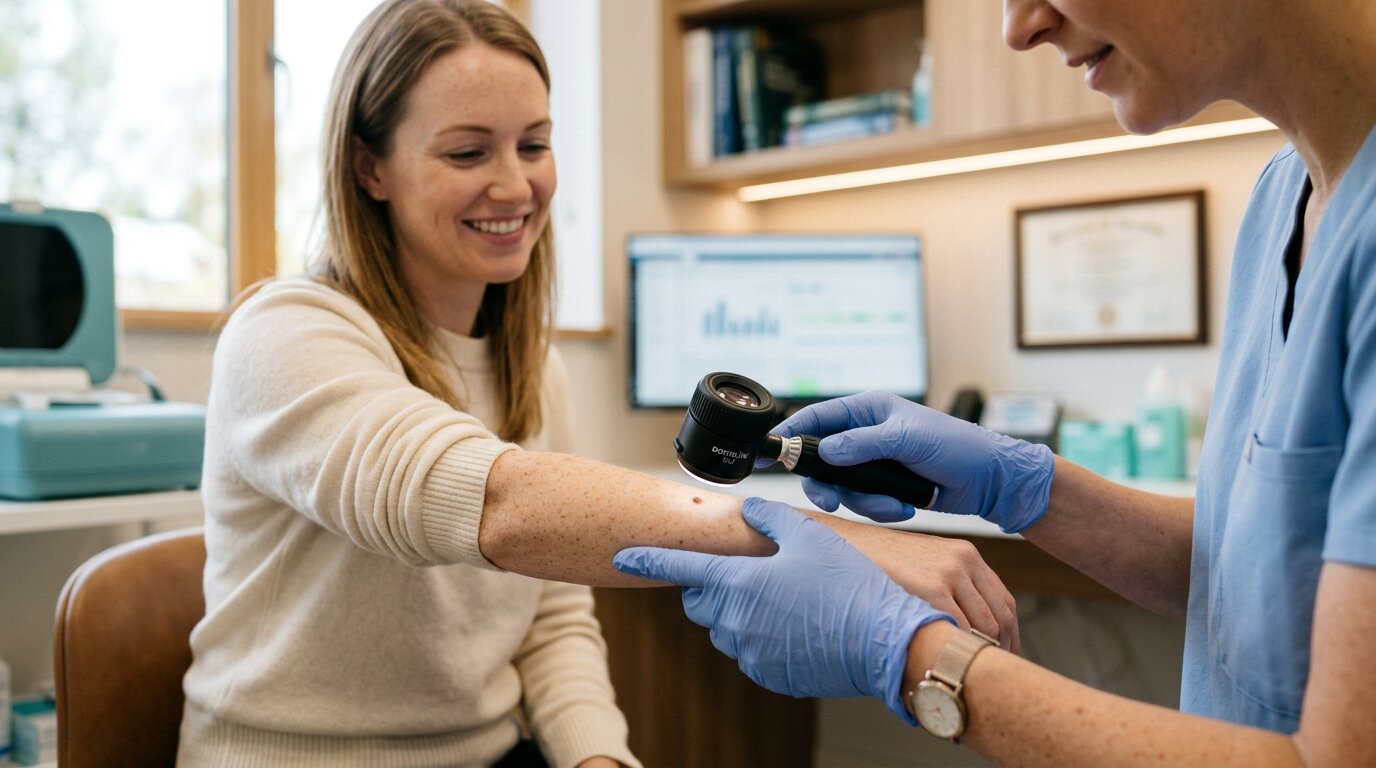
Hearing that a close relative has skin cancer can raise difficult questions. Many people immediately wonder whether they could develop the disease too, especially if multiple family members have been diagnosed over the years. While sun exposure remains the leading cause of most skin cancers, genetics can also play a significant role in determining risk.
The relationship between heredity and skin cancer is more complex than many people realize. Some forms of skin cancer are strongly influenced by inherited gene mutations, while others are more closely tied to environmental exposure and lifestyle factors. Understanding the difference can help individuals make informed decisions about screening, prevention, and conversations with healthcare providers.
The Different Types of Skin Cancer
Before discussing genetics, it’s important to understand the three primary categories of skin cancer:
- Basal cell carcinoma (BCC) — the most common type, usually slow-growing and strongly linked to cumulative sun exposure.
- Squamous cell carcinoma (SCC) — also associated with UV damage and more likely to spread than BCC.
- Melanoma — the least common but most dangerous form because it can spread rapidly to other organs.
Among these, melanoma has the strongest known hereditary connection. According to the American Cancer Society, around 1 in 10 people with melanoma have a family history of the disease.
That does not mean skin cancer is always inherited, but it does mean genetics can significantly increase susceptibility in certain families.
How Genetics Influence Skin Cancer Risk
Genes affect how the body repairs damaged DNA, controls cell growth, and responds to ultraviolet (UV) radiation. Some inherited mutations reduce the body’s ability to repair skin cell damage caused by sunlight, increasing the likelihood that cancerous cells will develop over time.
Researchers have identified several inherited gene mutations linked to melanoma, including:
- CDKN2A
- CDK4
- BAP1
- MITF
Among these, CDKN2A is considered one of the most important hereditary melanoma genes. Mutations in this gene can dramatically raise lifetime melanoma risk.
The National Cancer Institute notes that inherited melanoma can run in families in an autosomal dominant pattern, meaning a parent carrying the mutation may pass it to children.
People with inherited risk factors are often encouraged to become more familiar with the early symptoms of skin cancer and to perform regular skin self-examinations. Changes such as a mole becoming asymmetrical, developing uneven borders, changing color, or growing rapidly can sometimes indicate early melanoma development. Non-healing sores, persistent scaly patches, or bleeding skin lesions may also warrant medical evaluation. Because genetically susceptible individuals may develop skin cancer at younger ages or experience multiple lesions over time, early recognition and prompt dermatologic assessment become especially important.
However, inherited mutations account for only a minority of total skin cancer cases.
Family History Does Not Guarantee Cancer
One of the biggest misconceptions about hereditary cancer is the belief that genetics automatically determines outcomes. In reality, inherited risk is only one piece of the puzzle.
A person may inherit genes associated with higher melanoma risk but never develop cancer. Meanwhile, someone without any family history may still develop melanoma because of extensive UV exposure, tanning bed use, or repeated sunburns.
Experts emphasize that skin cancer usually develops through a combination of:
- Genetic predisposition
- Sun exposure
- Skin type
- Immune system health
- Age
- Environmental influences
This explains why skin cancer sometimes appears to “run in families” even when no identifiable mutation exists. Families often share similar skin tones, outdoor habits, climates, and levels of sun exposure.
Traits That Can Be Inherited
Even without a direct cancer-causing mutation, inherited physical traits may still increase risk. People with the following characteristics are generally more vulnerable to UV damage:
- Fair skin
- Freckles
- Red or blond hair
- Blue or green eyes
- Skin that burns easily
- Large numbers of moles
These traits are genetically inherited and are associated with a higher risk of melanoma and other skin cancers.
For example, two siblings who both inherited fair skin and light eyes may share elevated melanoma risk even if neither carries a rare hereditary mutation.
When Family History Becomes More Concerning
Doctors tend to pay closer attention to hereditary risk when certain patterns appear in a family. Warning signs may include:
- Multiple relatives diagnosed with melanoma
- Family members diagnosed at unusually young ages
- One person is developing several melanomas
- A family history of melanoma alongside pancreatic cancer or certain brain tumors
The American Academy of Dermatology explains that inherited melanoma genes are relatively uncommon, but people with strong family histories may benefit from genetic counseling.
Genetic counselors help families understand whether testing may be useful and what the results could mean for relatives.
Are Basal and Squamous Cell Cancers Genetic Too?
Melanoma receives the most attention in genetic research, but basal cell carcinoma and squamous cell carcinoma can also have hereditary components.
According to the National Cancer Institute, several inherited syndromes can increase the risk of these cancers, although these syndromes are rare.
For example:
- Basal cell nevus syndrome is linked to mutations in the PTCH1 gene and can cause numerous basal cell cancers.
- Xeroderma pigmentosum (XP) is a rare inherited condition that prevents proper DNA repair after UV damage, dramatically increasing skin cancer risk.
Still, for most people, BCC and SCC are primarily associated with long-term UV exposure rather than inherited mutations.
The Role of Sun Exposure
Even individuals with a strong genetic predisposition can reduce risk through protective habits. UV radiation remains one of the most preventable causes of skin cancer.
Dermatologists consistently recommend:
- Wearing broad-spectrum SPF 30+ sunscreen
- Avoiding tanning beds
- Seeking shade during peak sunlight hours
- Wearing hats and UV-protective clothing
- Monitoring the skin for unusual changes
Research shows that repeated blistering sunburns, especially during childhood, significantly increase melanoma risk later in life. Genetics may increase vulnerability, but UV exposure often acts as the trigger.
Should You Get Genetic Testing?
Not everyone with a family history of skin cancer needs genetic testing. In many cases, routine dermatology screenings and sun protection are considered more useful than genetic analysis alone.
Testing is generally considered when:
- Three or more relatives have melanoma
- Multiple melanomas occur in one person
- Melanoma develops unusually early
- Melanoma appears alongside pancreatic cancer in a family
The American Cancer Society notes that genetic testing can sometimes help identify inherited mutations such as CDKN2A, but testing also has limitations.
A negative result does not eliminate risk entirely because scientists have not identified every possible hereditary factor. Likewise, a positive result does not guarantee cancer will develop.
For many families, genetic counseling is the most practical first step before testing decisions are made.
Early Detection Matters Most
Regardless of genetics, early detection remains one of the most important tools for improving outcomes. Melanoma is highly treatable when caught early but becomes more dangerous once it spreads.
People with a family history of skin cancer should consider:
- Annual full-body skin exams
- Regular mole monitoring
- Photographing suspicious spots over time
- Reporting skin changes promptly
The commonly used ABCDE rule can help identify warning signs of melanoma:
- Asymmetry
- Border irregularity
- Color variation
- Diameter larger than 6 mm
- Evolving appearance
Changes in a mole’s shape, color, texture, or size should always be evaluated by a healthcare professional.
Genetics Are Important — But Not Everything
Skin cancer can absolutely have a hereditary component, particularly in melanoma. Certain inherited mutations significantly raise risk, and family history should never be ignored. Still, genetics alone rarely determines whether someone will ultimately develop skin cancer.
Sun exposure, lifestyle, skin type, and routine screening all influence outcomes. Even people with inherited risk factors can take meaningful steps to reduce danger through prevention and early detection.
For individuals with several relatives affected by melanoma or unusual cancer patterns in the family, speaking with a dermatologist or genetic counselor may provide valuable guidance. Understanding personal risk is not about fear — it’s about gaining the information needed to protect long-term health.